Showing posts with label Extra Credit. Show all posts

Tuesday, November 10, 2015

Essay Quiz 2

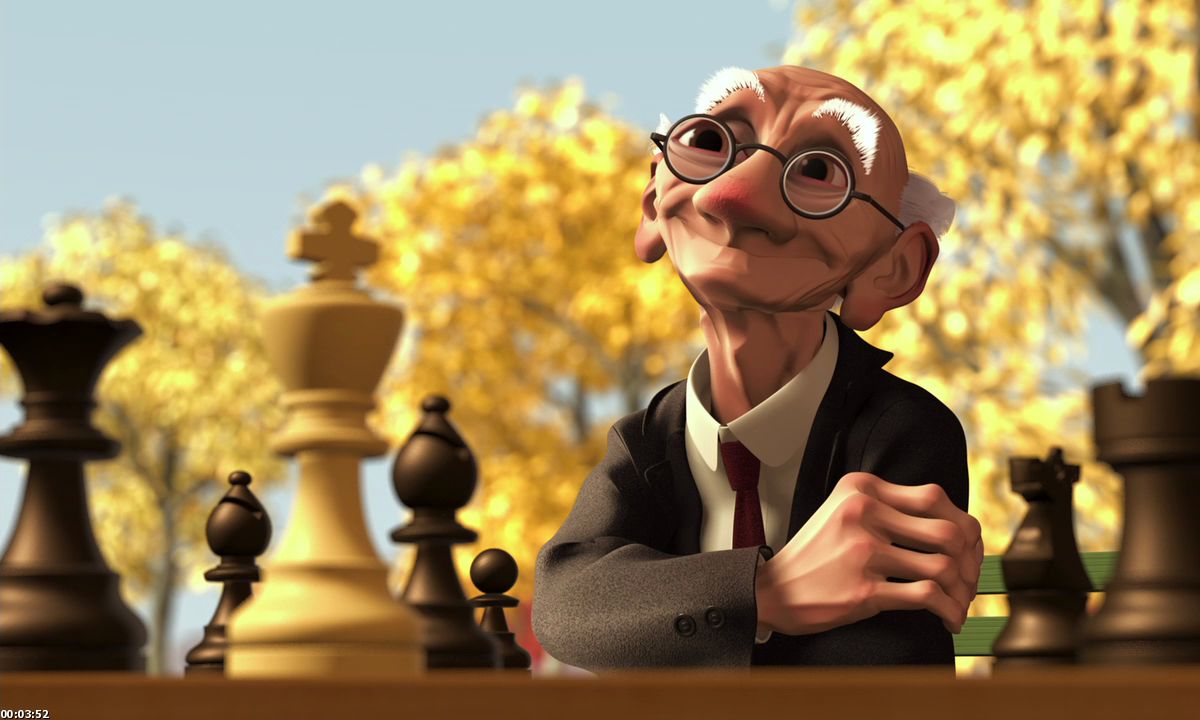
Last Thursday we watched Geri’s Game in class which went along with the Pixar readings perfectly (obviously). In class we talked about how this was one of the first time Pixar projects where they worked on creating a believable human (and cloths too). And in the Technology and the Evolution of Storytelling reading John Lasseter said “It’s not the technology that entertains people, it’s what you do with the technology.” which is so true. I know I wasn’t paying attention to Geri’s skin or cloths I was just enjoying the story, which shows that storytelling really is the most important thing as mentioned in the Pixar’s Storytelling reading. John Lasseter also said “I always viewed the technology as simply a tool”. And that's exactly how Pixar uses it, technology is a tool to improve your art, but if it’s all about the technology that will apart obvious. Over the past twenty years Pixar has made leaps and bounds in animation. But it is only when you put images of their past a present works together that you realize how far they have come.


Even though Geri is an old man and Riley is a little girl you can still see how different they are and how far Pixar has come.


Monday, November 9, 2015

Essay for quiz 2

The short film "The Stain" is a very interesting film. Putting an interpreted spin of a magazine article about a pair of twins shooting one another over a stain, the company Leeds animation brings a feminist side to the story.
The story starts off like any ordinary family fairytale, with a family starting and children growing. The way women are portrayed in this film is in a very limited manner. The oldest daughter is shown to be always hiding something. Whenever cleaning, she would be shoving dirty dishes and cloths into drawers. This could symbolize the way she is hiding the shame of having a child within the family and hiding the fact that she is the reason why her daughter is in the wheelchair. The young daughter in the wheelchair is also limited in travel. She is always shown looking out the window, imagining the world around her as a fantasy that she wants to be apart of but can't because of her condition. She is looked down upon as "the baby", not as the young girl that she wants to be. Both of these women show traits of women at the era this was made. Yearning for more, hiding away dirty secrets and being trapped behind the walls established by the men in the household. Themes that could be seen as a correlation with early feminist movements. The film, though short, brought the concept of how these two women were treated and how they felt like being entangled in a situation that would end with the situation dealing with the stain.
The reason why I choose this film is because I found it relatable and also found that it was interesting to look at. I found it relatable in the sense that I was the girl in the wheelchair in a way; except instead of not being able to walk, it was because I would always look out the window and imagine the possibilities of what things could be like if I had the courage to tackle daily challenges of social interaction. Also, I found this film visually interesting. Switching from 2D to Stop Motion to even a little bit of live action. The cleaning scene kind of freaked me out, but made me amazed as to how they pulled that off. Kind of inspiring, taking an article and using it as a creative prompt.

Thursday, November 5, 2015

Quiz Two: Essay Extra Credit

The film that I am picking as one of my favorites (besides Feather Tale), was Wendy Tilby’s Strings. It was a simple film that kept me happy, worried and always questioning of what could happen next. Now I don’t usually pick favorite films based off of style of the film, I pick based off story. But this film’s animation style wowed me in an odd way, it wasn’t Disney/Pixar/DreamWorks “perfect” and it wasn’t the poor man’s style bad. It seemed like someone took a story book, and then animated the pictures to move and to tell the story rather than have me read it myself.  
 Tilby made me relate to almost all the characters in ways, by the way the moved, acted and reacted to life. It was the kind of film that made you wonder about everyone, and how things got to be, why were the boats so important to the Lady? What was this important dinner for? Did the two people know each other? Or was this the first time they met the neighbor upstairs? The story made me think of life and how when we grow old, we won’t care much about the hard things, but really a simple thing like a drop of water will make us go to the unknown and help out with someone in need before a light could fall and end a dinner.

Essay Quiz #2 Extra Credit

How to "train" your dragon.
One of my favorite film shown in class was Co Hoedeman’s Tchou-Tchou. It is similar to the films I enjoy creating myself; animating toys through stop-motion. I thought it was really neat to see a wooden building-block world come to life where characters can re-create and invent blocks to form new objects. The characters themselves were entertaining to watch as well, with their quirky walk cycle and multi-dimensional faces. There are undeniable biblical correlations in Tchou-Tchou; there is a young boy and a girl in a utopian-type setting who confront a serpent. I like the direction Hoedeman takes this well-known bible story, as he doesn’t conclude the tale in an expected form. Instead of having the serpent successfully tempt the boy and girl and cause them to sin, the boy and girl discreetly alter the design of the serpent in the night, and turn him into a chou-chou train. This playful twist in the story is surprising, and it is hard not to just roll with it. The theme of play in Tchou-Tchou is present throughout the entire film, and I think that is the message Hoedeman was striving for. Tchou-Tchou is not meant to be complex or confusing, it’s meant to be a fun, simple story.

Geri's Game

Geri's Game is one of my favorite films that have been shown in class. Its simple but complex at the same time. The work on the film is incredible and well done. However, its not the incredible picture that captured my attention, it was the story, which I think is deeper than an older man playing chess with himself. In our reading over Pixar we did, the article says that the true beauty of Pixar lies in the storytelling. "Its in the telling of a tale that the emotional appeal takes hold." The story in the hands of the wrong storyteller would just be a boring game of a man playing chess with himself, but even without words, in Geri's Game I actually felt emotionally engaged in it, because I felt bad for the old man that he had to play chess with himself, even if it seemed like he enjoyed it.

To me, this was a story of an old man that longed for companionship. Geri longs for someone to be able to go through his later life with. It made me sad to see that he had to play by himself, and I wanted to hop right in the film and start playing with him just so he had someone. He seemed to have had fun, but deep down we all know he is in pain and longing for a relationship with someone. So, clearly there is a deeper meaning to this film, and I think Pixar's storytelling was brilliant and the true beauty of the film.

Tuesday, October 13, 2015

The Mighty Animator, Extra Credit


The Mighty Animator, Extra Credit
Hello everyone, before I start blogging, I just wanted to start by saying that if you haven’t read the extra credit reading, The Mighty Animator, Frédéric Back, I would definitely recommend reading it.
So there was something that Frédéric Back said to William Moritz that really go to me in the reading, “The problem today is that there are no more artists and thinkers at the head of organizations, only bureaucrats who make notes and count numbers.”
If you really think about it, it’s kind of a depressing thought. How much art goes unseen in the world today, even though we have so much technology to make so much art? How much art will go unmade because business men don’t want to spend the money? How many people will never get to see beautiful results of an artist’s work because it would be too risky?
So it also brings up the question we talked about in class, would you make your art (films) if no-one ever saw them? What would be the point in making anything? Sure, some people will make art at home that they might not show people but nobody would work for years on a project that in the end no-one would ever see.
I know in class that some people said that they would still make art even if no one would see it, but how much time and money would you really spend for a movie that in the end no-one (or not many people) would see?? How good would you really make your art if no-one was going to see it any ways?


Moritz and Back (Extra Credit)


William Moritz said this to Frederick Back: "One terrifying thought to me is that since the same Radio Canada which closed down the Animation Department owns your films, they could presumably withdraw them from circulation, not show them, they could be lost, decay in the vaults."

It's a depressing thought. Art that many years produced could be lost forever, no-one being able to see the beautiful results of tedious work. That brings up the question that was briefly discussed in class today, "Would you make you art/films if no one would end up seeing them?" For Back, many people had already seen his work, so he was content (none of his work was actually withdrawn completely).

I would like to think that all people's art is seen by someone other than themselves. It's a depressing thought that any art goes unseen. Of course, people will make art to practice and hone their skills, but nobody works for many hours/days/years on a project that they will not show anyone. What would be the point? The way to make sure that no one out there is becoming like Narcissus, people have to share their art with each other.


An interesting thing that Back said was "I had the opportunity to go with [Meheut] and make drawings beside him. 'Draw everything,' he told us, 'it will all disappear.' He was right."

I do not draw things that I see often enough, and it is something that I regret and would like to change. Saving the image of something in art that may one day disappear is a wonderful thing to think of. People of the future could see beautiful things of the past in art. Of course, you would first have to share you art.

Hours of Work (Extra Credit)

“When you’re in your little room by yourself drawing, it can be depressing: it’s so repetitive, and you never know, drawing after drawing, what will happen when they get on film; you just have to faith in your project, and keep on.” -William Moritz 


Animation is hard. The animation process of an animated film is perhaps the most tedious, because of its repetition with drawing characters, manipulating computer models, or moving puppets over and over again. The general public doesn’t realize how much time is put in to the process. After all, one of the job’s of an animator is to have the outcome on their craft seem effortless, and the result of this happens through hours and hours of work. Being alone while working on an animated film can even be “depressing” as Moritz puts it. It’s often hard to keep pushing yourself to get your work finished. But there is one thing that serves as a main inspiration to complete the work: focusing on the final product. There’s no question it’s going to be a lot of fastidious work. As animator Giancarlo Volpe put it, “I'm going to strap a GoPro to my head while I make cartoons & upon viewing 95% of animation students will drop out of college from boredom.” It’s dangerous when people lose sight of why they love to create cartoons. It can become mundane to draw over and over again for extended time periods. If a person falls into this trap, they ought to question why they got into animation in the first place.